How Many Ounces Are in a Cup? (US vs Metric vs UK)
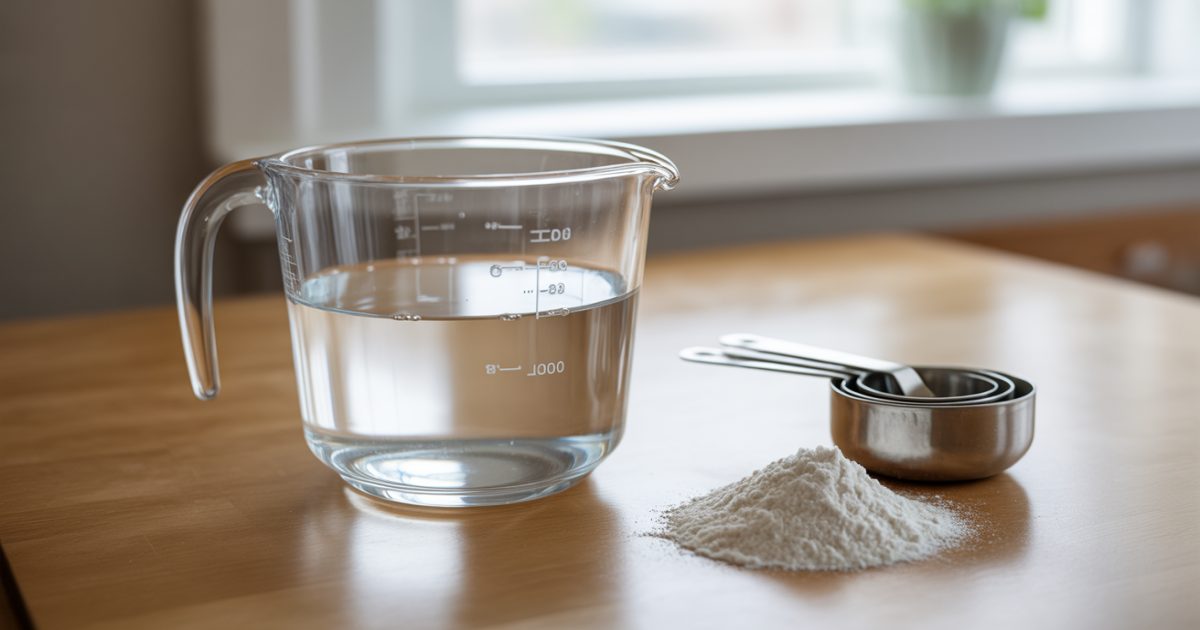
A US customary cup holds 8 fluid ounces, which is 236.6 mL. But that answer only holds if the recipe uses American cups and you mean fluid ounces, not weight. A US "legal" cup on nutrition labels is 240 mL, a metric cup is 250 mL, and an old British cup is 284 mL. The word "ounce" hides the biggest trap of all.
How many fluid ounces are in a cup?
A US customary cup contains exactly 8 US fluid ounces, or 236.588 mL, since a cup is defined as half a US liquid pint. This is the figure behind almost every American recipe and the markings on a standard glass measuring cup. So half a cup is 4 fl oz, a quarter cup is 2 fl oz, and two cups make a US pint.
| Fluid ounces (US) | Cups |
|---|---|
| 2 fl oz | ¼ cup |
| 4 fl oz | ½ cup |
| 6 fl oz | ¾ cup |
| 8 fl oz | 1 cup |
| 12 fl oz | 1½ cups |
| 16 fl oz | 2 cups |
Is a fluid ounce the same as an ounce by weight?
No, and this is where most kitchen mistakes start. A fluid ounce measures volume, like a small carton of liquid; an ounce measures weight, like something on a scale. They match only for water, where 8 fluid ounces weighs about 8 ounces. For anything lighter or heavier than water, the two numbers pull apart fast.
Flour is much less dense than water, so a cup of it weighs roughly half what a cup of water does. Sugar, oats, and cocoa each have their own weight per cup too. That is why a recipe written in weight ounces or grams is more reliable than one written in cups: a scale removes the guesswork. A scooped-and-packed cup of flour can swing from about 3.5 to 5.5 ounces, a 20% spread that ruins delicate bakes.
How many mL is a cup, and why do labels say 240?
A US customary cup is 236.6 mL, but the cup printed on US nutrition-facts labels is the "legal" cup of exactly 240 mL. The Food and Drug Administration uses the rounder 240 mL figure for serving sizes. The gap is about 1.4%, small enough to ignore when cooking but worth knowing when you compare a label serving to your measuring cup.
Why is a UK or metric cup a different size?
Cups are not standardized worldwide, so the same recipe word means different volumes in different countries. A metric cup holds 250 mL and is standard in Australia, New Zealand, and Canada. The old UK imperial cup held 284 mL, or 10 imperial fluid ounces. Grabbing the wrong one throws a recipe off by up to 20%.
| Cup standard | Fluid ounces | Millilitres | Where it's used |
|---|---|---|---|
| US customary | 8 US fl oz | 236.6 mL | US home recipes |
| US legal | ~8.1 US fl oz | 240 mL | US nutrition labels |
| Metric | ~8.5 US fl oz | 250 mL | Australia, NZ, Canada, modern UK |
| UK imperial | 10 imperial fl oz | 284 mL | Old British cookbooks |
There is a second wrinkle: the fluid ounce itself is not the same on both sides of the Atlantic. A US fluid ounce is 29.57 mL, while an imperial fluid ounce is 28.41 mL, about 4% smaller. The two systems split in the 1820s over different gallon sizes, and the mismatch has stuck around ever since. So even "10 fluid ounces" means something different depending on the country.
How do you convert fluid ounces to cups by hand?
Dividing fluid ounces by 8 gives you cups in the US system, since 8 fl oz make one cup. That single step covers most kitchen conversions. Here is the method with a worked example on 20 fluid ounces, the size of a large drink.
- Confirm the ounces are fluid — check the recipe means volume, not weight on a scale.
- Divide by 8 — 20 fl oz ÷ 8 = 2.5, because one US cup is 8 fl oz.
- Read off the cups — 20 fl oz equals 2½ cups.
- Sanity-check the halves — a spare 4 fl oz is a half cup, so 2 cups plus 4 fl oz confirms 2½.
Going the other way is just as quick: multiply cups by 8 to get fluid ounces. Three cups is 24 fl oz, half a cup is 4 fl oz. When you would rather not do the arithmetic on odd numbers, the fluid ounces to cups calculator converts any amount and holds the US, metric, and imperial cups apart so you never mix them up.
What are the most common cup-and-ounce mistakes?
Beyond swapping fluid for weight ounces, a few errors show up constantly. Each one looks harmless until the cake sinks or the sauce splits, and all of them trace back to assuming one "cup" or one "ounce" when several exist.
- Measuring dry ingredients in a liquid cup. Use a flat-topped dry cup you can level off; a spouted liquid cup overfills flour and sugar.
- Using a UK or Australian cup on a US recipe. A 250 mL metric cup adds about 6% more than a 236.6 mL US cup, enough to throw off baking ratios.
- Trusting "8 oz = 1 cup" for solids. It works for water and other thin liquids only. Weigh flour, sugar, and butter, or convert with a density-aware tool.
Frequently asked questions
Is 8 ounces always equal to 1 cup?
Only for fluid ounces of water-like liquids. Eight fluid ounces of water, milk, or juice is one US cup. Eight ounces by weight of a dry ingredient such as flour is not one cup, because weight and volume are different measurements.
How many ounces are in a cup of coffee or water?
A standard US cup of coffee or water is 8 fluid ounces, or 236.6 mL. Note that a "cup" on a coffee maker is often only 5 or 6 fluid ounces, a leftover from older serving conventions, so a 12-cup pot does not hold 12 measuring cups.
How many mL are in a cup?
A US customary cup is 236.6 mL. The US legal cup used on nutrition labels is 240 mL, a metric cup is 250 mL, and an old UK imperial cup is 284 mL. For everyday US cooking, use 236.6 mL.
Why is a UK cup bigger than a US cup?
The historical UK imperial cup held 10 imperial fluid ounces, which is 284 mL, while a US cup holds 8 US fluid ounces, or 236.6 mL. They were simply defined differently. Modern British recipes usually use grams or a 250 mL metric cup instead.
How do I convert dry ounces to cups?
You cannot convert weight ounces to cups with a single number, because the answer depends on the ingredient's density. Eight ounces of flour is about two cups, but eight ounces of sugar is closer to one. Use a density-based converter or a kitchen scale for accuracy.
Is a US fluid ounce the same as a UK fluid ounce?
No. A US fluid ounce is 29.57 mL and an imperial fluid ounce is 28.41 mL, so the US unit is about 4% larger. The difference comes from the two countries defining the gallon differently in the 1800s.
Once you separate fluid ounces from weight ounces and pin down which cup a recipe means, measuring stops being a guessing game. When the numbers get awkward, run them through the fluid ounces to cups converter to turn any ounce figure into clean cups across the US, metric, and imperial standards in one step.