How to Calculate MPG (and What Counts as Good)
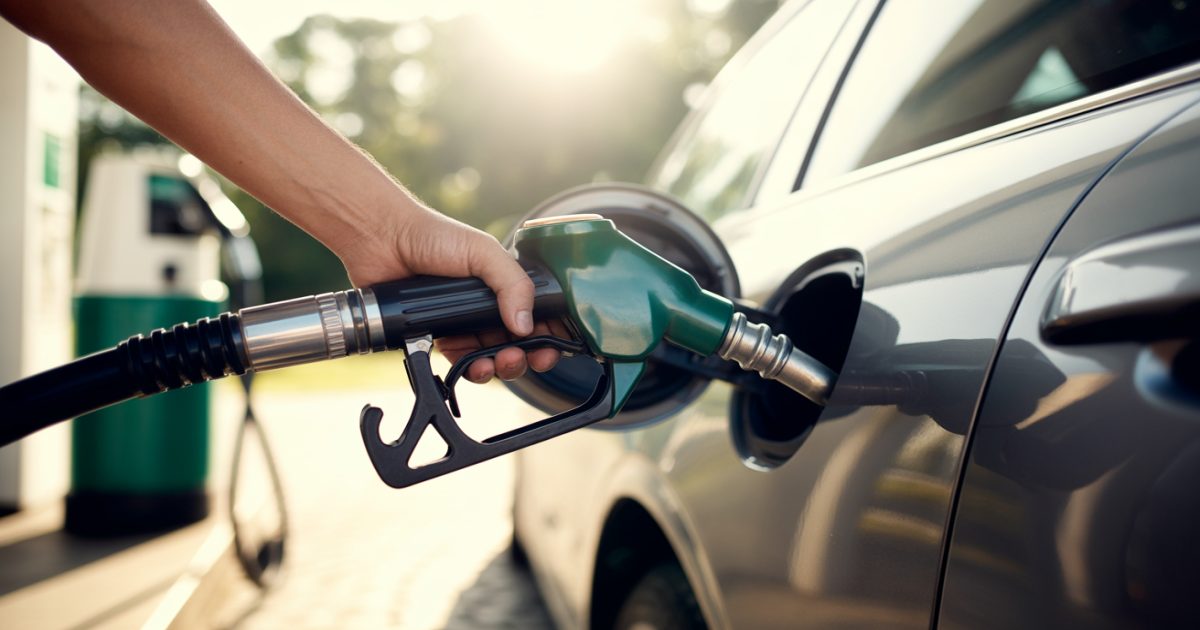
Your car's MPG is just miles driven divided by gallons used. To get a real number instead of a marketing one, fill the tank, zero the trip meter, drive for a few days, then refill and divide the miles you covered by the gallons it took to top off. That single division tells you what you're actually getting.
How do you calculate MPG by hand?
Divide the miles you drove by the gallons you burned. The trick is measuring gallons accurately, and the only honest way to do that is at the pump: fill to a full tank, note your mileage, drive, then refill and see how much fuel the pump adds back. The gallons on that second receipt are exactly what your trip used.
What's the step-by-step pump method?
You need two fill-ups and one trip in between. Fill completely both times, to the same automatic shut-off, so the gallons on the second receipt match the fuel your trip consumed. Reset the trip meter at the first fill and you won't have to subtract odometer readings later.
- Fill the tank to the click — pump until it shuts off on its own. Don't top it off past that; the click is your consistent baseline.
- Reset the trip meter to 0.0 — hold the trip button by the odometer until it zeroes. This counts your miles for you.
- Drive normally — for at least a full day, ideally three or four, mixing your usual city and highway routes.
- Refill to the same click — the gallons the pump adds equal the fuel your trip used.
- Divide miles by gallons — trip meter reading ÷ gallons pumped. If the meter says 296 and the pump added 10.8 gallons, that's 27.4 MPG.
What counts as good MPG?
Good MPG depends entirely on what you drive. The average new US vehicle hit a record 27.2 MPG in model-year 2024, but that average hides a huge spread. A compact should clear 30; a full-size truck doing 22 is doing well for its class. Judge your number against similar vehicles, not against the national average.
| Vehicle class | Typical combined MPG (2026) | Examples |
|---|---|---|
| Compact / sedan (gas) | 30–40 | Honda Civic 36, Corolla ~35 |
| SUV / crossover (gas) | 20–30 | midsize crossovers |
| Full-size pickup (gas) | 15–22 | F-150 2.7L 22, 5.0L V8 19 |
| Hybrid car | 45–55+ | Prius 52, Elantra Hybrid 54 |
| Hybrid SUV | 35–45+ | RAV4 Hybrid 40, Kia Niro 53 |
| Hybrid truck | ~40 | Ford Maverick Hybrid 40 |
The pattern is straightforward: the heavier and taller the vehicle, the lower the ceiling, and adding a hybrid system lifts every class by a wide margin. Hybrids now make up close to half of new US sales, which is why a 40-MPG SUV no longer sounds exotic. Set your expectation by the row your car sits in.
Why does city MPG differ from highway MPG?
A gas engine wastes fuel every time you brake away speed you paid to build, and city driving is one long chain of accelerate-and-stop. Highways let the engine settle into an efficient cruise, so a conventional car posts its best numbers there. The EPA combined rating blends the two at 55% city and 45% highway.
What is MPGe for electric cars?
MPGe means "miles per gallon of gasoline equivalent," the EPA's way of putting EVs on the same yardstick as gas cars. It's built on one conversion: 33.7 kilowatt-hours of electricity holds the same energy as a gallon of gasoline. An EV that travels 100 miles on 33.7 kWh rates 100 MPGe.
How do driving habits change your MPG?
The number you calculate isn't fixed to the car; a big share of it is your right foot. Hard acceleration, high cruising speeds, idling, and under-inflated tires each shave miles off every gallon. Speed is the largest single lever, because aerodynamic drag climbs steeply once you pass roughly 50 mph.
- Ease off above 50 mph. Drag rises fast, so every 5 mph over that point quietly raises your cost per mile.
- Accelerate and brake gently. Every hard stop throws away fuel you already spent building speed.
- Keep tires at spec and drop the roof box. Low pressure and a loaded roof rack both add resistance you're paying to overcome.
- Cut idling and short cold trips. A cold engine on a two-mile errand is at its thirstiest and never warms into its efficient range.
Frequently asked questions
How many miles should I drive before calculating MPG?
At least a full tank, and ideally three to four days of mixed driving. A short sample exaggerates whatever conditions you happened to hit. For a number you can rely on, average the MPG from three to five separate fill-ups.
Is the MPG on my dashboard accurate?
It's usually a few percent optimistic. The onboard computer estimates fuel use from injector data rather than measuring gallons at the pump, and it tends to round in the car's favor. Calculate it yourself from a receipt to see the real figure.
Do I have to reset the trip meter, or can I use the odometer?
Either works. The trip meter just saves you a subtraction. If you'd rather use the main odometer, write down the reading at the first fill and subtract it from the reading at the refill to get your miles driven.
Why did my MPG drop in winter?
Cold weather thickens fluids, cuts tire pressure, and makes the engine run rich until it warms up, and winter gasoline blends carry slightly less energy. Short trips in the cold are especially costly because the engine never reaches its efficient temperature.
Is higher MPG always cheaper to run?
For gas cars, yes — fewer gallons means a smaller fuel bill. For EVs, MPGe doesn't translate directly to cost, since it measures energy efficiency rather than price. To compare true running cost, work out the dollars per mile from your fuel or electricity rate.
What's a good MPG for a truck versus a car?
They're not comparable. A compact car should clear 30 MPG, while a full-size pickup returning 20–22 is doing well for its size and weight. Always judge MPG against vehicles in the same class, not against a single national target.
Once you've measured a clean number, the useful next step is turning it into money and time. Enter your miles and gallons in the MPG Calculator to lock in your true fuel economy, then feed that figure into a trip fuel cost estimator to see what your next drive will actually cost at the pump.